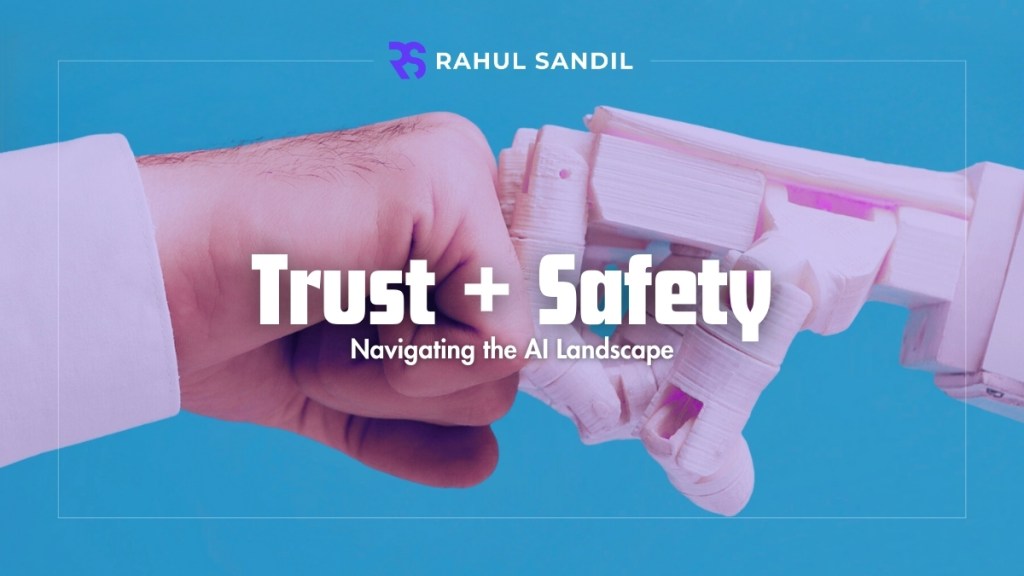
In this new AI Landscape, the ability to ingest and analyze copious amounts of publicly available data is revolutionary. From creating lifelike avatars to generating content, AI’s impact transforms how we interact with technology.
However, amid the excitement, a voice of caution and skepticism emerges. According to a 2023 study, only 39% of U.S. adults believe today’s AI technologies are safe and secure. Additionally, 85% supported nationwide government, industry, and academia efforts to make AI safe and secure.
As we enter this AI-powered future, it’s essential to address concerns about privacy and the responsible use of this groundbreaking technology.
Dispelling Misconceptions: AI as a Catalyst for Positive Change
One prevailing misconception that echoes through the corridors of technological discourse is the fear that AI will usher in a job apocalypse. The reality, however, paints a different picture. AI is not a threat to jobs but a catalyst for positive change, creating new opportunities and avenues that were previously unimaginable.
Envision a world where AI augments our capabilities, freeing us from mundane tasks and empowering us to focus on creativity and problem-solving. This optimistic perspective invites us to embrace AI as a collaborator, not a competitor. The key lies in demystifying the aura of fear surrounding AI, fostering a mindset that sees this technology as a force for good, capable of ushering in an era of unprecedented growth and prosperity.
Building Consumer Trust in the AI Landscape: The Pillars of Transparency
Building and maintaining consumer trust is paramount for marketers navigating the AI landscape. The secret sauce lies in transparency. Marketers must adopt AI technologies with an open mind, acknowledging their use and demystifying the creative process. Picture this – a blog post proudly proclaiming, “Created with AI, Adobe Firefly.” Such transparency showcases the innovative tools at play and builds a bridge of trust between marketers and consumers.
Transparency extends beyond mere acknowledgment. It involves a conscientious effort to ensure that AI-generated content undergoes a thoughtful review process. Marketers should refrain from hastily publishing AI-generated materials. Instead, they should engage collaboratively with AI tools, refining and enhancing content to align with brand values.
The Call for Responsibility: Regulating AI for a Safer Tomorrow
Responsibility in thr AI Landscape extends beyond individual marketers to the creators of AI tools and the platforms that deploy them. As social media platforms curate content and enforce rules, AI tools must incorporate controls to prevent misuse. Imagine an AI engine that can discern inappropriate content and prompt users with a gentle reminder – a digital guardian angel ensuring responsible usage.
In the absence of self-regulation, the onus falls on a collective effort. A consortium of social media companies, software developers, and trade bodies should come together to formulate governing policies. This collaboration aims to create a safety net that monitors, reports, and takes down AI-generated content that violates ethical standards.
Both national and international governments also play a pivotal role in shaping the AI landscape. Some regulatory frameworks have emerged encouragingly, signaling a commitment to addressing the ethical concerns surrounding AI. It’s a step in the right direction, laying the groundwork for a harmonious coexistence between humanity and artificial intelligence.
A Marketer’s Ethical Compass: Navigating the AI Landscape
At the heart of this discussion lies the role of marketers as stewards of AI. It’s a call to embrace an ethical compass that guides actions and decisions. Marketers armed with powerful AI tools should not view customers as mere targets but as partners in a shared journey. The most successful brands and marketers are not in competition with their customers; instead, they are in service of them.
This paradigm shift calls for a recalibration of marketing goals. It’s about enriching lives, creating value, and fostering positive experiences. As marketers wield the superpower of understanding customers through AI analytics, the emphasis should be on leveraging this knowledge responsibly. Spying on customers or surreptitiously collecting data is not the path to success; it detours into ethical quandaries and reputational risks.
Towards a Brighter Future: AI, Trust, and Safety Hand in Hand
As we embark on this exhilarating journey into the transformative AI Landscape, there is promise and potential. Trust and safety emerge not as obstacles but as guiding lights illuminating the path forward. Each player in the AI ecosystem – from individual marketers to the creators of AI tools, from platforms to governments – is responsible for ensuring that the future we build is one where innovation thrives in harmony with ethical considerations.
Let us not fear the unknown but embrace it with open arms, for within the realm of AI lies the potential to reshape our world for the better. It’s a future where trust and safety are bedrock, propelling us toward new horizons of creativity, collaboration, and boundless possibilities. As we navigate the seas of AI, let us chart a course that leads us to a brighter, safer, and more trusted future.
If you want to read more about my thoughts on AI, Marketing, and Leadership, check out my blog, connect with me on LinkedIn, or follow me on Medium.

Related
